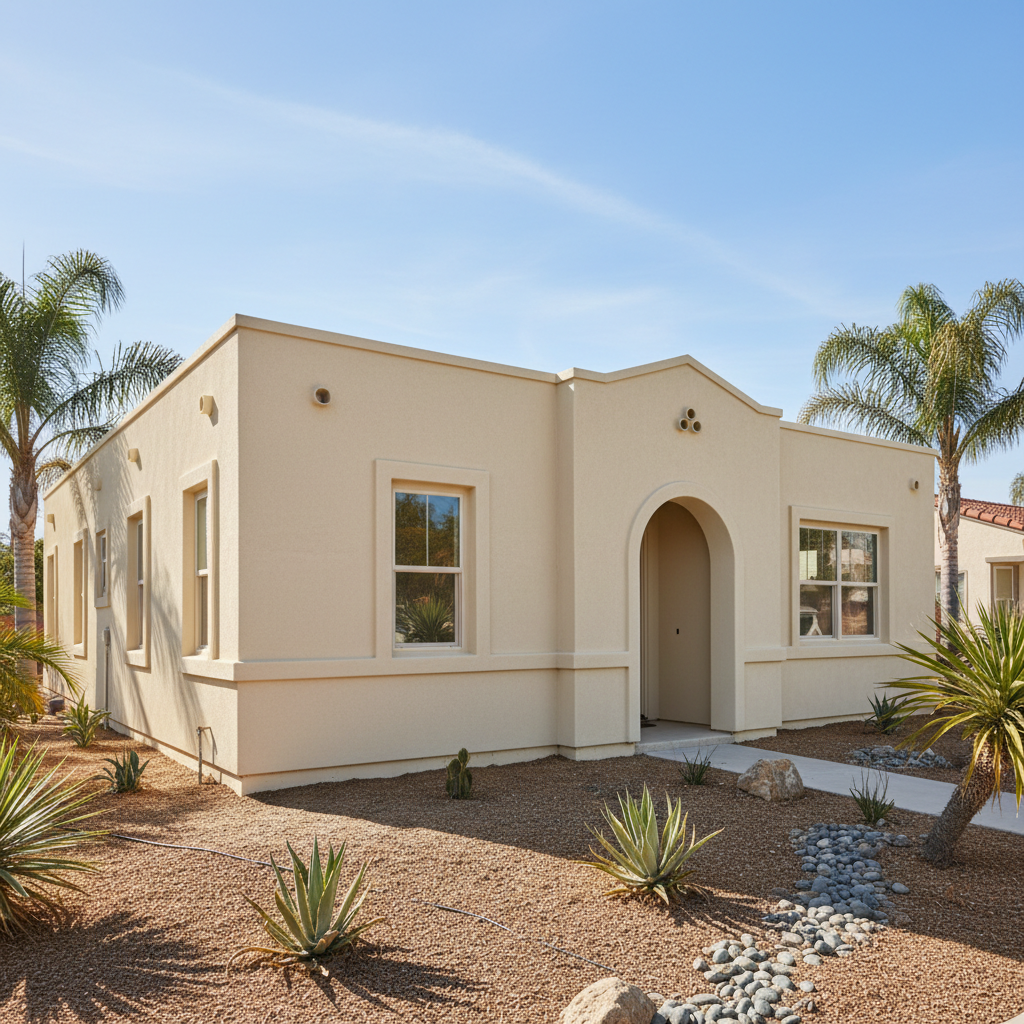
Alright, let's talk EIFS – Exterior Insulation and Finish Systems. You're probably looking at it for its energy efficiency, durability, or maybe just the clean, modern look it gives a building. Good choice, it's a solid system when installed right. But like anything else in construction, you want to know what it's going to cost you, especially here in San Diego where prices can swing wildly.
You've heard the rumors, right? EIFS can be pricey. And yeah, it can be. But it's also a premium product with a lot of benefits. So, let's get into the nitty-gritty of what affects that final price tag.
What Drives EIFS Installation Costs?
There isn't a one-size-fits-all answer, but I can tell you the main factors that'll make your quote go up or down. It's not just about square footage, though that's a big part of it, obviously.
- System Type: There are different types of EIFS. The most common is barrier EIFS, but drainable EIFS (which includes a drainage plane behind the insulation) is generally preferred. This is especially true in our coastal climate where we get those heavy, wind-driven rains. Drainable systems cost a bit more because they involve extra materials and labor for that crucial drainage gap. You're looking at maybe an extra $1-2 per square foot for a drainable system, but it's worth every penny.
- Insulation Thickness: EIFS is all about insulation. The thicker the insulation board (EPS foam), the better the R-value, and the higher the material cost. Standard thickness is usually 1-2 inches, but if you're going for maximum energy efficiency, you might choose 3 or 4 inches. That'll add to the material cost, but could save you a lot on your AC bill in August.
- Building Complexity: This is a huge one. A simple, flat, rectangular wall is easy to work on. Lots of corners, arches, windows, doors, architectural details, or varying wall planes? Each of those adds labor time for cutting, fitting, and detailing the EIFS. Multi-story buildings also mean scaffolding and more complex safety setups, which drives up labor costs significantly. If your home has a lot of intricate architectural features, expect the per-square-foot price to climb.
- Surface Preparation: What's underneath the EIFS matters. If we're going over existing stucco that's in good shape, prep might be minimal. If there's old, damaged siding, or if we're going over bare sheathing that needs a lot of work, that's extra labor and materials. Sometimes, we even need to remove existing finishes, and that's a whole separate line item.
- Finish Type and Color: EIFS finishes come in a huge range of textures and colors. A basic fine-grain acrylic finish is pretty standard. If you want a specialty finish, like a coarse aggregate, a custom color match, or a more intricate texture, that can add to the material cost and sometimes the application time.
- Accessibility: Can we easily get equipment and materials to all sides of your house? Is it on a steep hill in La Jolla? Are there tight spaces between your house and your neighbor's? Difficult access means more time and effort for the crew.
Typical EIFS Cost Ranges in San Diego
Okay, the numbers you've been waiting for. For a typical residential EIFS installation in San Diego, you're generally looking at:
- $12 to $25 per square foot.
Now, I know that's a big range, but it really depends on those factors I just listed. For a straightforward, single-story home with good access and a standard drainable system, you might be closer to the $12-$16 range. For a complex, multi-story custom home with lots of architectural details, thicker insulation, and a specialty finish, you could easily hit $20-$25 or even a bit higher.
Remember, this is for the EIFS system itself, installed. This usually doesn't include things like extensive structural repairs, major window/door replacements, or extensive landscaping removal that might be needed to access the walls.
What Should Be Included in Your Quote?
When you get a quote from San Diego Stucco & Plastering, or any reputable contractor, it should be detailed. You want to see:
- Scope of Work: A clear description of what walls will be covered, what type of EIFS system (barrier or drainable), and the insulation thickness.
- Materials Breakdown: Specifics on the insulation type, base coat, mesh, primer, and finish coat.
- Surface Preparation: What prep work is included (e.g., power washing, minor repairs, flashing installation).
- Flashing and Sealants: Proper flashing around windows, doors, and penetrations is critical. Make sure it's explicitly mentioned.
- Labor Costs: This is often bundled, but it's good to know it's accounted for.
- Cleanup and Debris Removal: We don't leave a mess behind.
- Warranty Information: Both for the materials and the workmanship.
How to Avoid Overpaying for EIFS
It's simple: do your homework. Get multiple quotes, but don't just pick the cheapest one. A super low bid often means corners are being cut, and with EIFS, that can lead to major problems down the road – think water intrusion and structural damage. You don't want to be dealing with mold because someone skimped on flashing or didn't install a proper drainage plane.
Ask questions. A good contractor will be happy to explain their process, the materials they use, and why their price is what it is. Make sure they're licensed and insured, and check their references. Look for someone with specific experience in EIFS, not just general stucco. It's a different beast.
And be wary of anyone who gives you a super vague quote or pressures you into signing on the spot. Take your time, understand what you're paying for, and you'll end up with a quality EIFS system that lasts for decades.